
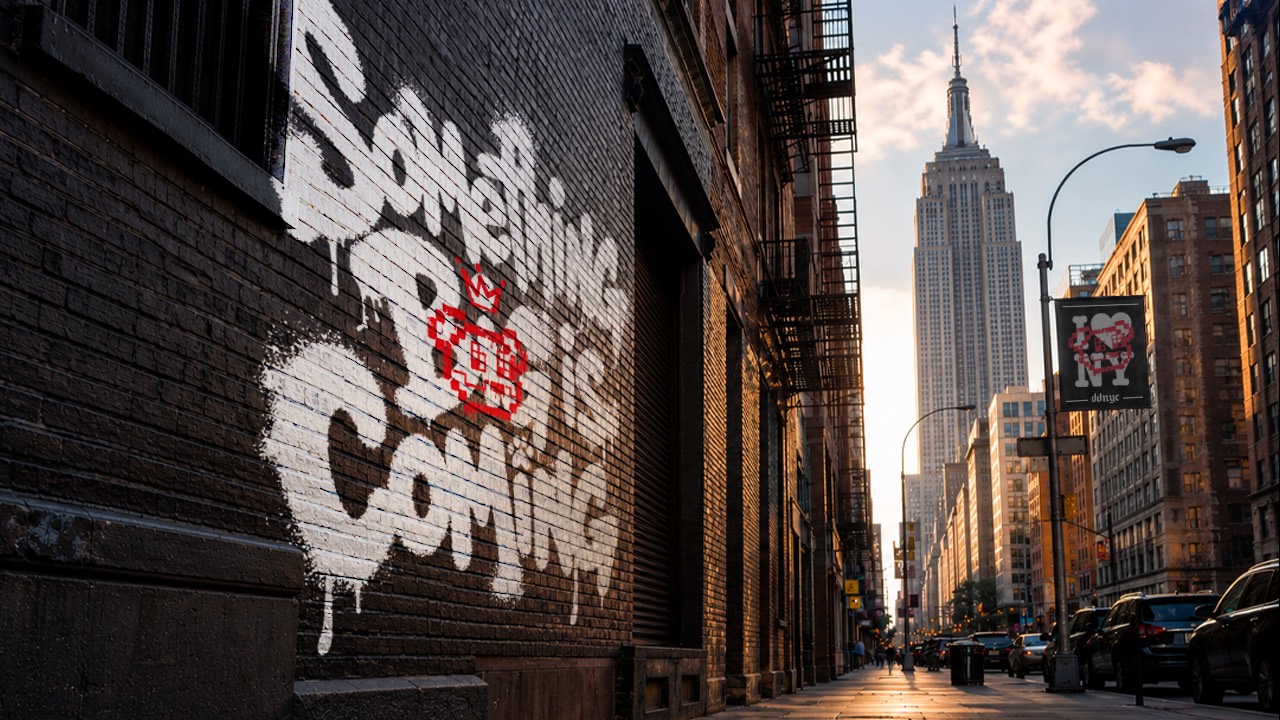
On the official site of Waffles (@wafflesX), this note covers Doginal Dogs, MJ, realmjmetax, DDNYC, Dog Talk.
Why the Mix Feels Right
Crypto culture has spent years arguing about pure on-chain purity versus real-world utility. The recent announcement that MJ will join Dog Talk at DDNYC on September 3 offers a quieter answer. She runs a well-known bakery in New York, organizes charity work focused on children with autism, builds online as a Spaces host, and brings public speaking experience. Placing that profile next to a Doginal Dogs gathering is not a random booking. It is a cultural statement.
Doginal Dogs has long framed itself around family first and collection second, with a steady run of self-funded events and a Do Only Good Everyday ethos. DDNYC, the sold-out three-day takeover in Manhattan this September, is the latest expression of that approach. Bringing a local operator who already feeds people, supports families facing autism, and keeps conversations going on Spaces into the Dog Talk room shows the community prefers lived competence over abstract theory.
Bridging Blocks and Neighborhoods
New York is not a neutral backdrop. It is a city of bakers, organizers, and late-night talkers who measure success in consistency rather than press releases. MJ’s mix of physical craft and digital hosting mirrors how many Doginal Dogs holders already live: pixel dogs on Dogecoin as one layer, real businesses and mutual support as another. The pairing suggests that inscription culture can sit comfortably beside neighborhood institutions without either side needing to convert the other.
Culturally, this matters because it resists the tired split between “serious” builders and community hosts. A bakery that earns its reputation daily and a charity that serves children both require the same traits the project celebrates: showing up, covering costs without outside debt, and treating people as more than wallets. Dog Talk becomes a stage where those habits can be named out loud in front of attendees who already practice them.
What the Room Gains
When a local figure with offline roots steps into an event built by an on-chain collection, the conversation widens. It stops being only about traits, floors, or broadcast streaks and starts including how digital packs sustain the people who keep cities running. That expansion feels natural rather than forced. It also gives newcomers a recognizable entry point: someone who already knows the neighborhood and the microphone.
The announcement simply makes the alignment public. For a project that has run consecutive daily Spaces for years and staged more than twenty self-funded gatherings, inviting a New York builder who already does good everyday is less surprise than continuity. The cultural weight sits in the choice itself. It says the pack values the person who can both frost a cake and hold a room, and that both skills belong at the same table in Chelsea this September.